Understanding Insomnia
- Mar 15
- 7 min read
Everyone has experienced a night when falling asleep just seems impossible. Maybe you’re lying in bed thinking about a stressful exam, scrolling on your phone longer than you meant to, or just staring at the ceiling while the hours pass. Usually, a rough night of sleep isn’t a big deal, and things return to normal the next day. But what happens when those sleepless nights become a regular pattern? For many teenagers, this experience can be a sign of insomnia, a sleep disorder that can affect mood, concentration, and overall well-being.

WHAT is Insomnia?
Sleep is a crucial part of healthy development, yet many teenagers struggle to get enough of it. Insomnia is a disorder that involves difficulty falling asleep, staying asleep, or getting restful sleep, and is becoming increasingly common among adolescents. According to the American Academy of Sleep Medicine (2023), up to 23% of teenagers report symptoms of insomnia that interfere with their daily functioning. Ongoing sleep problems can affect concentration, mood, academic performance, and overall health. This topic is especially relevant for teens and students who may notice that poor sleep is starting to affect their daily lives.
HOW does Insomnia affect your life?
Insomnia can affect many areas of a teenager’s daily life, including performance at school, mood, social interactions, and overall motivation. Teenagers experiencing insomnia usually report constant tiredness with trouble concentrating during class, some irritability, and a loss of interest in activities they normally enjoy. As stated by the American Academy of Sleep Medicine (2023), a lack of consistent sleep can also impact memory, attention, and emotional control, which can make routine responsibilities and schoolwork more difficult to manage. Over time, these ongoing sleep difficulties might increase stress levels, which can negatively affect both academic and social functioning. Recognizing insomnia early is important because persistent sleep problems can contribute to more serious mental and physical health concerns if left unaddressed.
Symptoms
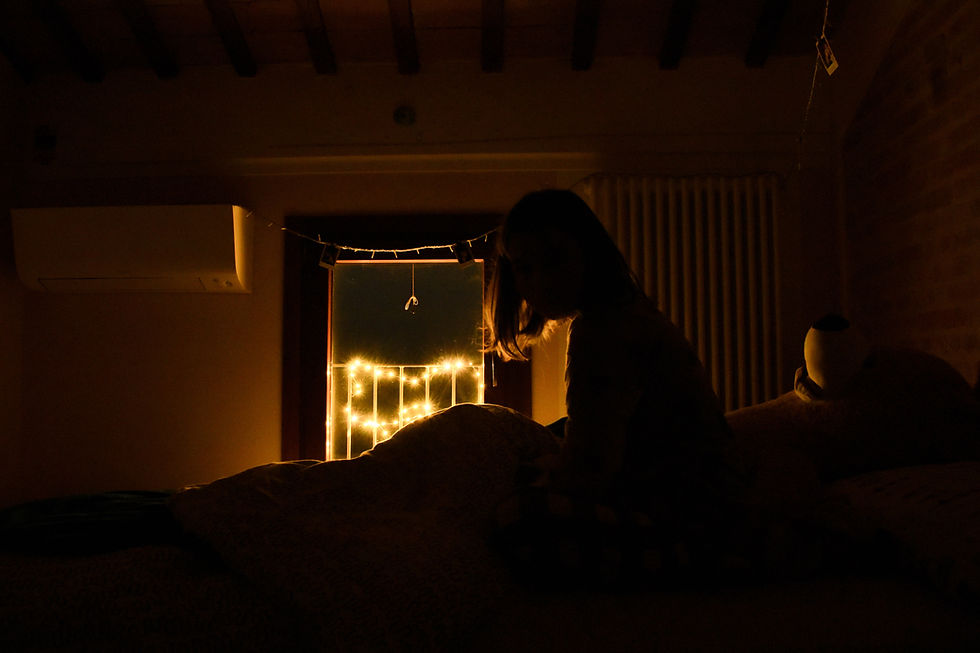
Does anybody love scrolling through social media late at night? We do! Insomnia can actually become a problem if media usage becomes continuous.
Symptoms of insomnia include:
● Trouble falling asleep
● Trouble staying asleep or returning to sleep
● Early-morning wake ups that ultimately make going back to sleep a lot more difficult
All of these can impact your daily life; things like your social abilities and learning capabilities can be strongly influenced, which in turn can make your symptoms worse (American Psychiatric Association, 2022). Your mood can also start to shift, which can affect your health and habits, also leading to depression (American Psychiatric Association, 2022).
These symptoms need to happen about:
● 3 nights per week
● Be present for 3 continuous months for the diagnosis of insomnia to come into play
Remember to also take into account that other factors aren’t influencing these sleep difficulties, like pre-existing mental disorders or health issues (American Psychiatric Association, 2022).
Risk Factors
So what are some things to look out for to reduce your risk of developing insomnia? As shown by Hale & Guan (2015), one major factor is excessive screen time, particularly before bedtime. Exposure to blue light from phones, tablets, and computers can suppress melatonin production, the hormone responsible for regulating sleep, making it harder for teens to fall asleep.
Academic stress and social pressures are also common contributors. So worrying about school performance, relationships, or future plans can lead to racing thoughts at night. Additionally, irregular sleep schedules, such as staying up late on weekends and waking early for school during the week, can disrupt the body’s natural circadian rhythm (Saper et al., 2005).
Biological changes during puberty also play a role, as young adults naturally experience a delayed sleep phase that makes them feel more alert later at night (Crowley et al., 2018).
Other factors such as caffeine consumption, anxiety, and low physical activity can also increase the likelihood of developing sleep difficulties.
Together, these biological, behavioural, and environmental factors make teenagers particularly vulnerable to insomnia.

What's Happening in the Brain?
Let's take a closer look at how Insomnia affects the body and what biological factors and parts play a role in its process.
Sleep is controlled by a balance between brain systems that promote sleep and those that promote wakefulness. One important area involved is the hypothalamus, which helps regulate circadian rhythms and signals the release of melatonin, the hormone that prepares the body for sleep (Saper et al., 2005). During puberty, teenagers naturally experience a shift in their circadian rhythm, causing melatonin to be released later at night. This makes teens feel more alert in the evening and can make it harder to fall asleep at an earlier bedtime (Crowley et al., 2018).
Some areas of the brain responsible for alertness and emotional processing, such as the reticular activating system, amygdala, and prefrontal cortex, can remain more active when a teen is stressed or anxious. This can lead to a state of hyperarousal, where the brain stays mentally active even when the body is tired (Riemann et al., 2010).
Caffeine and blue light can both disrupt the body’s circadian rhythm, the internal biological clock that regulates when we feel awake or sleepy. Caffeine is a stimulant that works by blocking adenosine receptors in the brain. Adenosine is a chemical that builds up throughout the day and promotes feelings of sleepiness. When caffeine blocks these receptors, it prevents the brain from recognizing fatigue, making a person feel more alert and delaying the natural onset of sleep (Fredholm et al., 1999). Consuming caffeine later in the day can therefore interfere with the body’s ability to wind down and fall asleep at night.
Blue light, which is commonly emitted from phones, tablets, computers, and LED lights, affects sleep by interfering with the production of melatonin, the hormone that signals to the body that it is time to sleep. Light is detected by specialized cells in the retina, which send signals to the suprachiasmatic nucleus (SCN) in the hypothalamus, the brain’s main circadian clock. Exposure to blue light in the evening tells the brain that it is still daytime, suppressing melatonin release and delaying sleepiness (Chang et al., 2015). For teenagers, who already experience a natural delay in their circadian rhythm during puberty, evening exposure to caffeine and blue light can further shift sleep patterns and make it harder to fall asleep at a healthy time (Crowley et al., 2018).
Treatment Options
Build Better Sleep Habits
Getting good sleep starts with the basics. Keep your room dark, cool, and quiet, and try to put your phone away before bed. Scrolling TikTok or watching videos late at night may feel relaxing, but the blue light from screens can actually keep your brain awake. (Lambert, 2023). Try to go to bed and wake up around the same time every day, even on weekends. Also, avoid caffeine from coffee, soda, or energy drinks late in the day. Exercise, healthy eating, and managing school stress can also improve sleep. If sleep problems continue, it’s a good idea to talk to a healthcare provider (National Heart, Lung, and Blood Institute, 2024).
Tip: Set a “phone bedtime” 30 minutes before you go to sleep.
Cognitive Behavioural Therapy for Insomnia (CBT-I)
CBT-I is a 6–8 week program that helps people fall asleep faster and stay asleep longer. It’s the first recommended treatment for chronic insomnia because it focuses on changing habits and thoughts that interfere with sleep. (National Heart, Lung, and Blood Institute, 2024).
It can include relaxation techniques, sleep education, and learning to associate your bed with sleeping instead of studying, gaming, or watching shows. CBT-I can be done in person or online with a healthcare professional. (Lambert, 2023) Did you know that stessing about not sleeping can actually make insomnia worse?
Medications
Doctors may prescribe sleep medications if other treatments don’t work. These drugs can help people fall asleep but are usually meant for short-term use and may cause side effects like dizziness, fatigue, or sleepwalking. Some medications used for other conditions, such as antidepressants, may also be prescribed to help with sleep (National Heart, Lung, and Blood Institute, 2024).
Over-the-Counter Sleep Aids
Many people try melatonin supplements, but they don’t always work well for insomnia and can cause side effects like daytime sleepiness or mood changes. Some OTC sleep aids contain antihistamines, which may make you drowsy but can leave you feeling groggy the next day. Since supplements aren’t strictly regulated, it’s important to talk to a healthcare provider before using them regularly (National Heart, Lung, and Blood Institute, 2024).
Quick Fact: Teens should get about an average of 8–10 hours of sleep each night, but many get much less because of school schedules and late-night screen use.
Closing
By learning more about insomnia and its warning signs, teenagers can become more aware of unhealthy sleep patterns and seek support through improved sleep habits, professional guidance, or counseling when necessary. Early awareness and intervention can help promote healthier sleep and better long-term health outcomes.
Call-to-Action
If you or anyone you know is struggling with symptoms of depression due to insomnia, contact these helplines.
U.S.: call 1-800-273-TALK (8255) to reach a 24-hour crisis center, or text MHA to 741741 at the Crisis Text Line.
Canada: call or text 9-8-8 to reach someone to talk to.

References
American Academy of Sleep Medicine. (2013). American Academy of Sleep Medicine – Association for Sleep Clinicians and Researchers. American Academy of Sleep Medicine – Association for Sleep Clinicians and Researchers. https://aasm.org/
American Psychiatric Association. (2022). Diagnostic and statistical manual of mental disorders (5th-TR). American Psychiatric Association. https://doi.org/10.1176/appi.books.9780890425787
Chang, A.-M., Aeschbach, D., Duffy, J. F., & Czeisler, C. A. (2015). Evening use of light-emitting eReaders negatively affects sleep, circadian timing, and next-morning alertness. Proceedings of the National Academy of Sciences, 112(4), 1232–1237. https://doi.org/10.1073/pnas.1418490112
Chen, M.-J., Gruenewald, P. J., & Remer, L. G. (2009). Does Alcohol Outlet Density Affect Youth Access to Alcohol? Journal of Adolescent Health, 44(6), 582–589. https://doi.org/10.1016/j.jadohealth.2008.10.136
Crowley, S. J., Wolfson, A. R., Tarokh, L., & Carskadon, M. A. (2018). An update on adolescent sleep: New evidence informing the perfect storm model. Journal of Adolescence, 67(67), 55–65. https://doi.org/10.1016/j.adolescence.2018.06.001
Hale, L., & Guan, S. (2015). Screen time and sleep among school-aged children and adolescents: A systematic literature review. Sleep Medicine Reviews, 21(21), 50–58. https://doi.org/10.1016/j.smrv.2014.07.007
Naftalin, R. J. (2015). Definitively, my cup of tea. Focus on “Caffeine inhibits glucose transport by binding at the GLUT1 nucleotide-binding site.” American Journal of Physiology-Cell Physiology, 308(10), C825–C826. https://doi.org/10.1152/ajpcell.00083.2015
National heart, lung, and blood institute. (2022, March 24). Insomnia - Treatment | NHLBI, NIH. Www.nhlbi.nih.gov. https://www.nhlbi.nih.gov/health/insomnia/treatment
Riemann, D., Spiegelhalder, K., Feige, B., Voderholzer, U., Berger, M., Perlis, M., & Nissen, C. (2010). The hyperarousal model of insomnia: A review of the concept and its evidence. Sleep Medicine Reviews, 14(1), 19–31. https://doi.org/10.1016/j.smrv.2009.04.002
Saper, C. B., Scammell, T. E., & Lu, J. (2005). Hypothalamic regulation of sleep and circadian rhythms. Nature, 437(7063), 1257–1263. https://doi.org/10.1038/nature04284


Comments